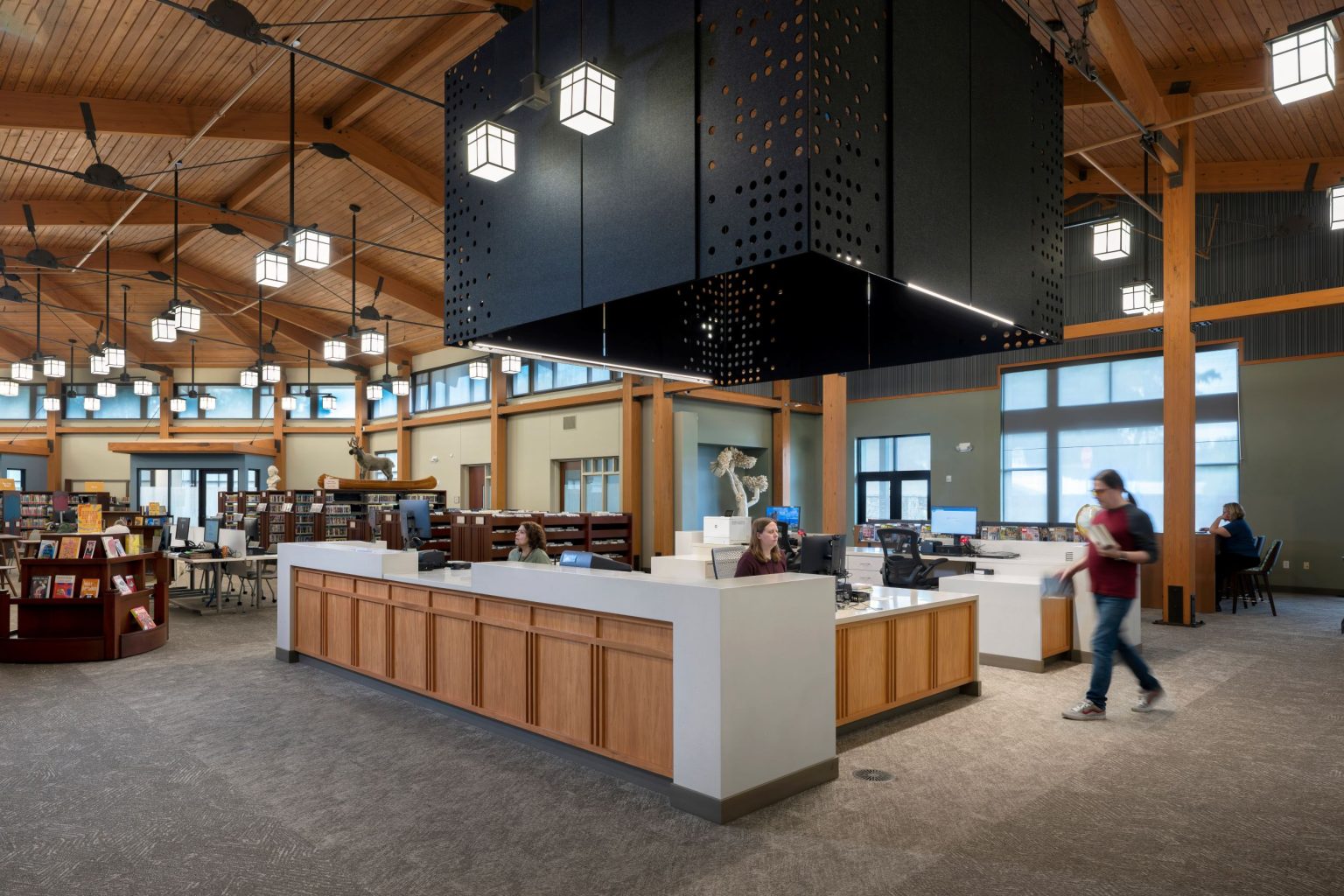
“Where every resource counts, even small changes can have an outsized impact on both provider satisfaction and patient outcomes.”

The correlation between space and behavior is an opportunity for healthcare leaders to leverage facility design as a tool for stronger care networks, improved outcomes, and value-based care (VBC).
Preparing for Change
At its core, population health reflects the conditions and behaviors that a culture incentivizes and/or tolerates, including factors spanning from the built environment, government policies, and social norms.
At the same time, by 2030, CMS aims to have 100% of Traditional Medicare beneficiaries and the vast majority of Medicare beneficiaries in accountable care relationships. Specifically, this initiative shifts from fee-for-service to VBC, focusing on improving health outcomes, reducing costs, and advancing health equity through advanced primary care and integrated specialty networks.
However, multidisciplinary care networks are challenging to maintain, particularly in sparsely populated rural communities with conventionally limited resources.
In fact, in rural communities, the ability to deliver high-quality care depends on a collaborative network of providers, systems, patients, and the broader community. Sustaining strong relationships between these groups to promote healthy behaviors benefits from a creative approach.

In the context of rural communities, scalable interventions are essential for overcoming barriers to care. The impact of spatial orientations on collaboration warrants an intentional look at how design can leverage it to bolster rural healthcare networks and communities at large.
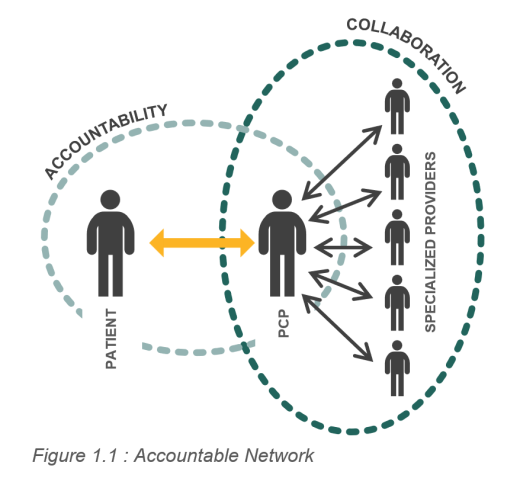
The orientation of providers, patients, and teams within clinics, hospitals, and the broader community—can either facilitate or hinder collaboration and accountable care relationships. When spaces encourage open communication, visibility, and shared responsibility, it lays the groundwork for a collaborative models of care .
By leveraging orientation to resolve collaborative gaps and strengthen accountability, healthcare leaders are enabled to use facility design as a tool to foster stronger networks, improve outcomes, and advance the mission of accountable care.
Orientation: A Collaboration Framework
Orientation refers to an alignment between entities. It provides adaptable methods of collaboration when applied to the build environment.
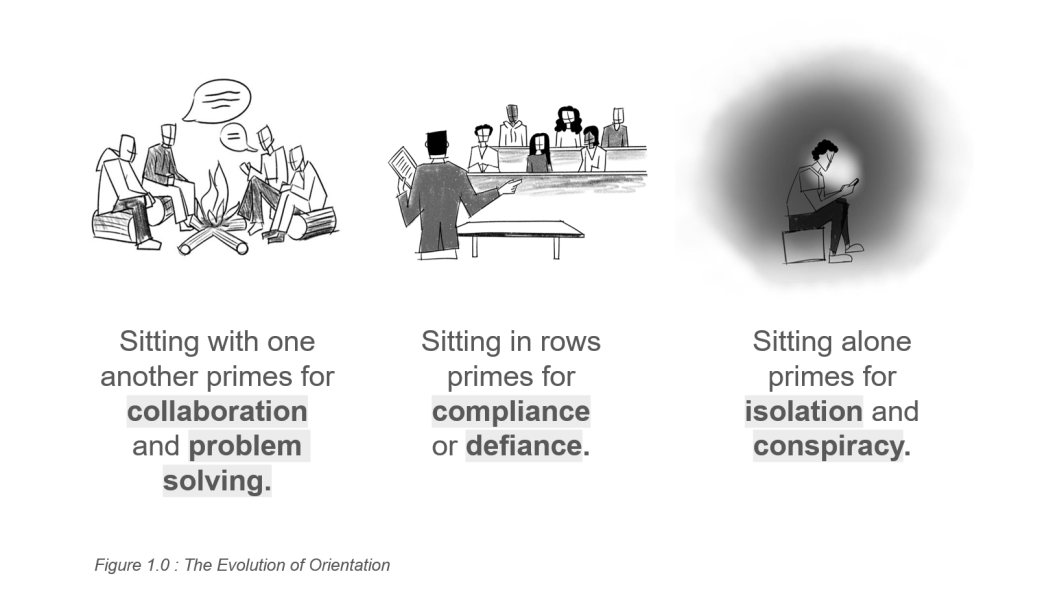
For example, fireside settings promote informal, personal interactions. In these face-to-face, circular settings, connection and engagement are high. As a result, people can easily read body language and expressions of others, creating a comfortable space to converse.
This fireside orientation translates itself in the way we might collaborate at work or connect through group therapy. This interpersonal orientation is effective in lowering barriers to engagement and prompting active participation between entities.
More structured orientations, like that of a lecture hall, can communicate a sense of hierarchy or compliance. These orientations limit informal communication and direct feedback, however, are effective in transmitting large quantities of information. This mode of collaboration can be effective for information sharing and educational settings.
Lastly, digital connectivity, when carefully implemented, can effectively bridge care gaps. However, outside of advanced care models, isolation can make loneliness is hard to evade—especially for rural communities where opportunities for social connection are limited.
Translating these orientations as a framework for evaluating and improving the effectiveness of collaborative care models can shed light on robust approaches to improving accountable care. A well-designed environment acts as a partner in care delivery, ultimately helping to build trust in healthcare systems and teams. In rural settings, where providers may be called upon to fulfill multiple roles and work across specialties, the physical layout of spaces can either reinforce or undermine efforts to provide optimal care experiences.
In turn,by intentionally designing with orientation, rural healthcare organizations can create facilities and spaces where accountability is embedded into everyday routines.
Strategic Arrangements:
Accountability through Architecture
Orientation directly influences the quality of interpersonal interactions and interdisciplinary teamwork within care networks. Scalable approaches may include:
- Ensure exam room layouts encourage providers to have face-to-face conversations with patients that build deeper relationships & interpersonal accountability .
- Use strategically placed communal areas to create open sightlines that foster collaboration between providers.
- Where possible, create healthy community resources and amenities that providers can nudge patients to leverage as a part of their care plans.
In rural environments, where every resource counts, even small changes can have an outsized impact on both provider satisfaction and patient outcomes.

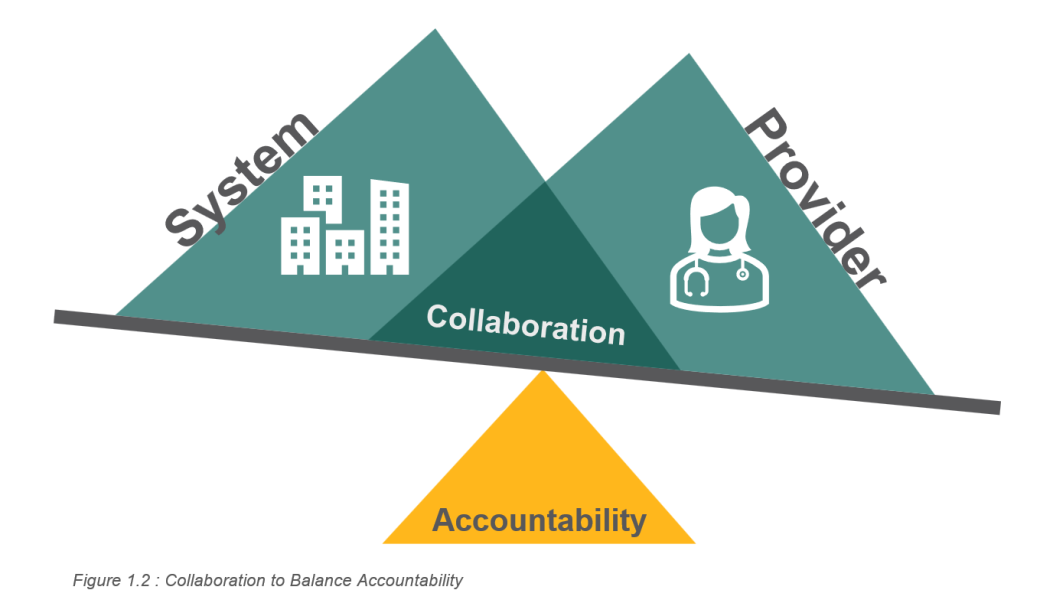
Identifying opportunities for improved collaboration begins with observing how people move through space. By identifying bottlenecks, redundancies, and gaps in communication, orientation can provide a lens for scalable improvement.
Incentivizing Care:
Promoting Healthy Behavior Change
The healthcare ecosystem extends beyond the walls of a clinic or hospital. Spatial orientations determine the access and relevance of health resources across a community. Therefore, improving collaborative networks on a community scale can equip providers with the resources they need to empower their patient population.
Scalable interventions at this level might include developing health programs across organizations, designing public spaces that encourage wellness (i.e. walking trails or community gardens), and ensuring providers are geographically accessible.
Effective orientation at the community level requires collaboration between healthcare providers, public health officials, and community organizations.
By leveraging provider expertise and engaging community stakeholders, designers tailor interventions to local needs and ensure they remain sustainable over time. These efforts not only improve health outcomes but also strengthen the fabric of rural communities, making them more resilient in the face of ongoing challenges.
Ultimately, the built environment’s ability to encourage accountable care networks and relationships is measured by the quantity and quality of opportunities that providers have to build patient relationships and equip patients with health resources and amenities as they pursue well-being outside of the clinic.
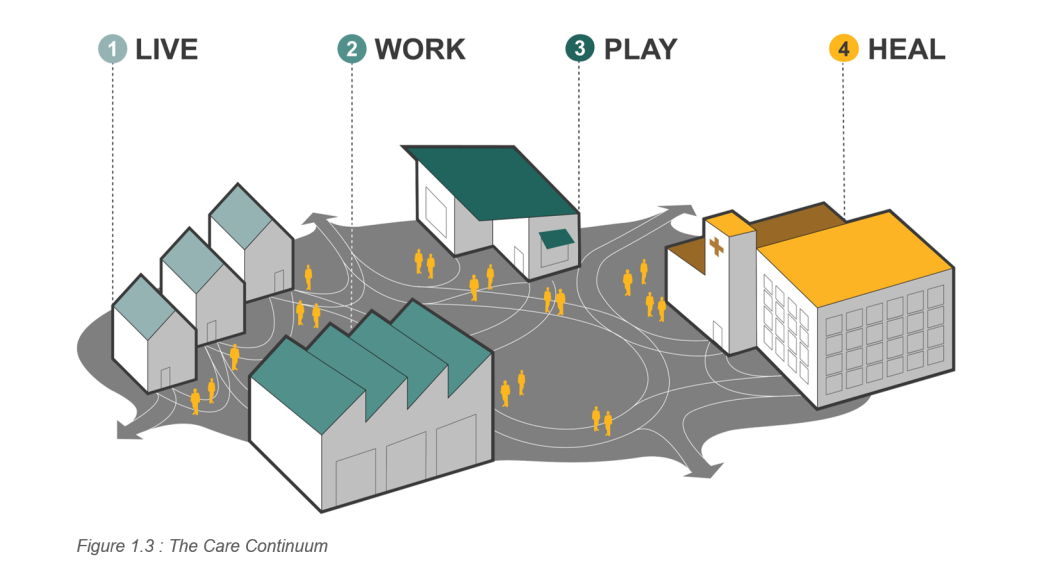
Community-level planning determines access to care, the relevance of health resources, and the inclusivity of services for all members. By considering the broader ecosystem, rural healthcare leaders can break down barriers, foster collective ownership over health outcomes, and promote equity across the care continuum.
By intentionally applying orientation to healthcare ecosystem design—both within facilities and across communities—rural healthcare systems can build stronger, more accountable networks to meet the needs of countries with the most prevalent health disparities.
FURTHER READING
Wilder ME, Kulie P, Jensen C, Levett P, Blanchard J, Dominguez LW, Portela M, Srivastava A, Li Y, McCarthy ML. The Impact of Social Determinants of Health on Medication Adherence: a Systematic Review and Meta-analysis. J Gen Intern Med. 2021 May;36(5):1359-1370. doi: 10.1007/s11606-020-06447-0. Epub 2021 Jan 29. PMID: 33515188; PMCID: PMC8131473.
Su JJ, Cline A, Bashyam AM, Masicampo EJ, Ip EH, Feldman SR. Evaluation of Accountability Measurement Tool in Patients with Psoriasis: A Validation Study. Dermatol Ther (Heidelb). 2020 Jun;10(3):495-502. doi: 10.1007/s13555-020-00376-w. Epub 2020 Apr 16. PMID: 32297222; PMCID: PMC7211770.
Kyte, Richard. Finding Your Third Place: Building Happier Communities (and making great friends along the way). Wheat Ridge, CO: Fulcrum Publishing, 2024.